Under-Eye Fillers: 3 Things to Check Before Your Treatment
핵심 요약
The right under-eye treatment depends on the cause: hollowing, fat, or pigmentation.
핵심 포인트
- Dark circles are not always caused by volume loss — the cause varies by individual
- Under-eye hollowing, fat protrusion, pigmentation, and thin skin each require a different treatment approach
- Adding filler when fat protrusion is the cause may worsen the appearance rather than improve it
- When pigmentation or visible blood vessels are the main cause, restoring volume alone is unlikely to help
- The Tyndall effect can occur when filler is placed too close to the skin surface
- Vascular complications, though rare, are a serious risk that must be understood before treatment
- If vision changes occur after treatment, emergency care must be sought immediately
목차 (5)

Under-Eye Filler —
Three Things to Know
Before You Decide
Dark circles don't always mean filler is the answer. Whether it's volume loss, fat protrusion, or pigmentation and thin skin — the right approach depends on the cause.
What's Causing
Your Dark Circles?
The right approach depends on identifying the cause first.
Dark circles rarely have a single cause. Here are the most common types to consider.
Hollowing that casts a shadow
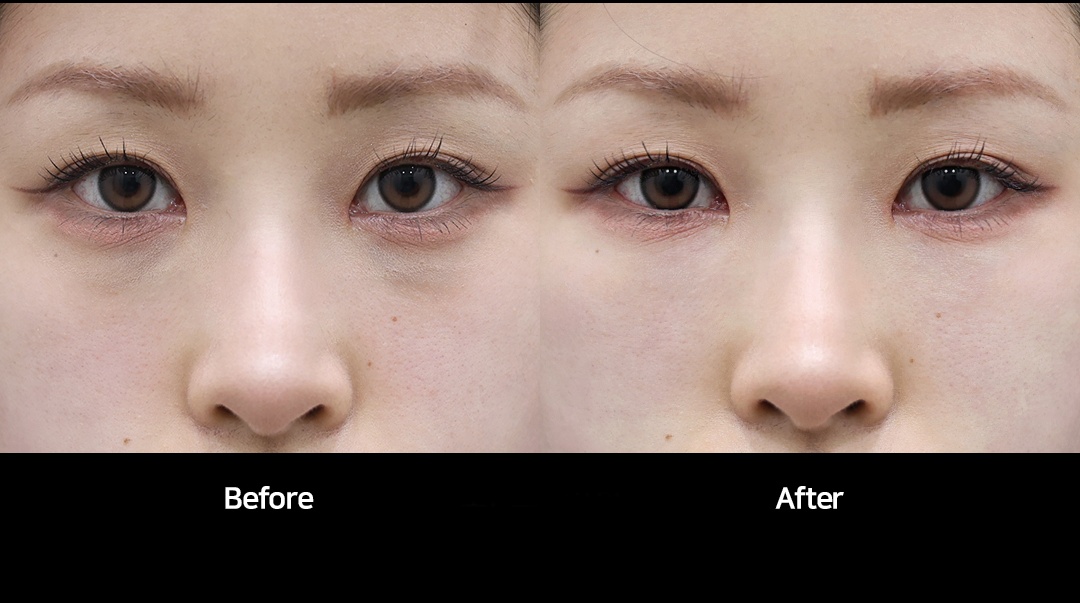
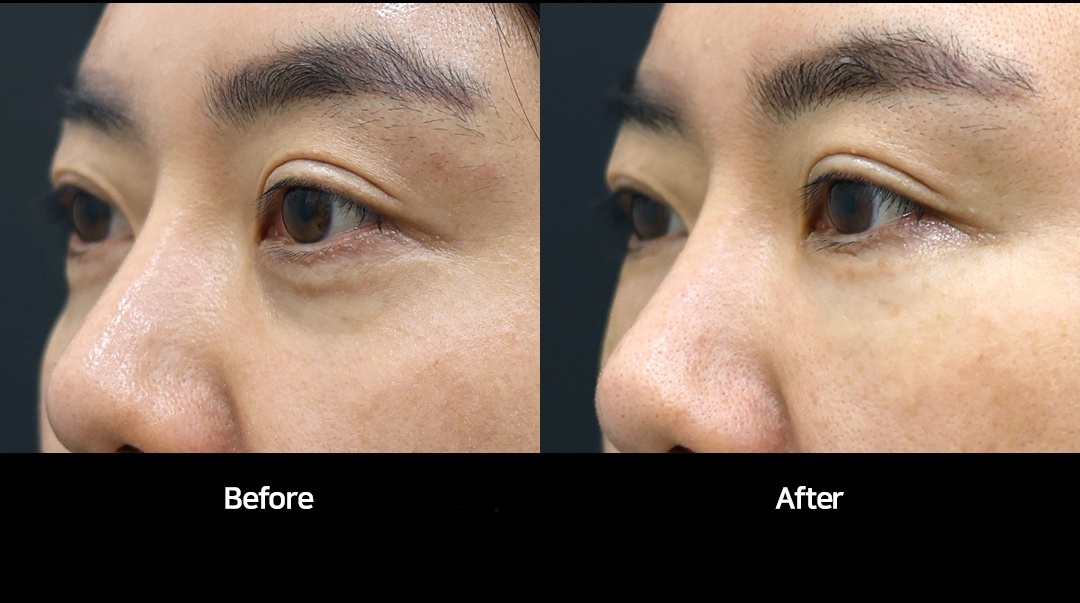
When the tear trough is deep or surrounding volume is lacking, the under-eye area can appear dark regardless of actual skin tone. In this case, hyaluronic acid filler to restore volume may be a suitable option.

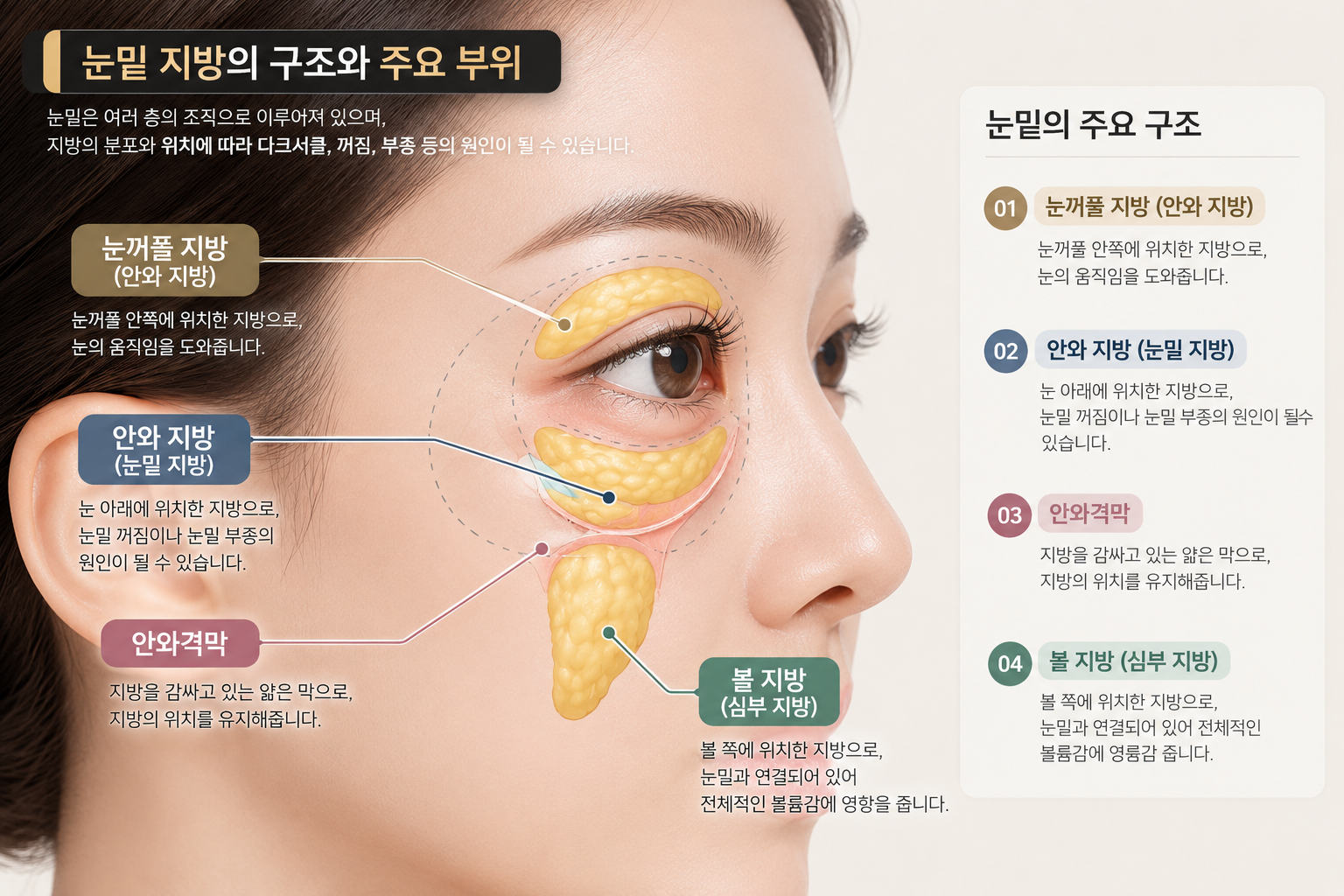
Fat protrusion beneath the eye
When fat pushes forward, the shadow it casts underneath can resemble dark circles. Adding filler in this case may actually emphasize the bulge — so it's important to first assess whether fat repositioning or another approach is more appropriate.
When fat protrusion is the primary cause, filling the area may worsen the appearance rather than improve it.
Pigmentation or thin skin
If the main cause is pigmentation, visible blood vessels, or fine lines, restoring volume alone is unlikely to produce meaningful improvement. Assessing the condition of the skin first is essential before deciding on a direction.
Are There Other
Options Besides
Filler?
The options vary depending on the cause.

Filler isn't the only option
Hyaluronic acid filler can be used to restore lost volume. Collagen-stimulating treatments offer a different approach depending on the product and method. In some cases, skin care or surgical treatment may also be considered.
Rather than deciding on a treatment first, the priority should be identifying the cause of your under-eye concern and choosing the approach that fits.
The same symptom can call for a different approach
Under-eye hollowing and fat protrusion require different strategies — even when they look similar on the surface. Previous treatments, skin thickness, and the condition of surrounding tissue also need to be taken into account.
Safety Requires
Extra Care
Around the Eyes
The under-eye area demands a careful, anatomy-informed approach.
Possible side effects to be aware of
The skin under the eye is thin and anatomically delicate. Bruising, swelling, or uneven contour can occur after treatment. If filler is placed too close to the surface, it may appear as a bluish tint — known as the Tyndall effect.
In rare cases, serious vascular complications can occur. Before proceeding, it's important to understand both the expected outcomes and the potential risks of treatment.
What to watch for immediately after treatment
If you notice any changes in vision or visual disturbances after treatment, do not wait — seek emergency care immediately.
Things to Check
Before You Book
Key questions to ask before under-eye filler.
Does dark under-eye skin always mean I need filler?
Not necessarily. Whether the cause is under-eye hollowing, fat protrusion, pigmentation, or visible blood vessels — the right approach is different in each case. Identifying the cause first is essential.
Can filler help if I have fat protrusion under my eyes?
If fat protrusion is the primary cause, adding filler may emphasize the bulge rather than reduce it. It's important to first evaluate whether fat repositioning or another method is more appropriate.
What is the Tyndall effect and can it happen to me?
The Tyndall effect occurs when filler placed too close to the skin surface appears as a bluish tint. Because under-eye skin is thin, the placement depth and technique need to be planned carefully.
What should I do if I notice vision changes after treatment?
If you experience any changes in vision or visual disturbances after treatment, do not wait — seek emergency care immediately.
How can I book a consultation?
You can reach Gold J Clinic directly via KakaoTalk or through our international channels — WhatsApp, WeChat, or Line.
Find out what your
under-eye really needs.
The right approach starts with understanding the cause.
Reach out via WhatsApp or explore our Instagram first.
함께 읽으면 좋은 글
자주 묻는 질문
Q. Q1. Does dark under-eye skin always mean I need filler?
A. Not necessarily. Under-eye hollowing, fat protrusion, pigmentation, and visible blood vessels each require a different approach. Identifying the cause first is the most important step.
Q. Q2. Can filler help if I have fat protrusion under my eyes?
A. If fat protrusion is the primary cause, adding filler may emphasize the bulge rather than reduce it. Fat repositioning or another approach may be more appropriate — and this should be evaluated before any treatment.
Q. Q3. What is the Tyndall effect?
A. The Tyndall effect occurs when filler placed too close to the skin surface appears as a bluish tint. Because under-eye skin is thin, placement depth and technique must be planned carefully to avoid this.
Q. Q4. What should I do if I notice vision changes after treatment?
A. If you experience any changes in vision or visual disturbances after treatment, do not wait — seek emergency care immediately.
Q. Q5. How can I book a consultation?
A. You can reach Gold J Clinic via WhatsApp or through our international Instagram @goldjclinic.global.